How to Tame a Paper Tiger: On Writing With Intentional Vulnerability
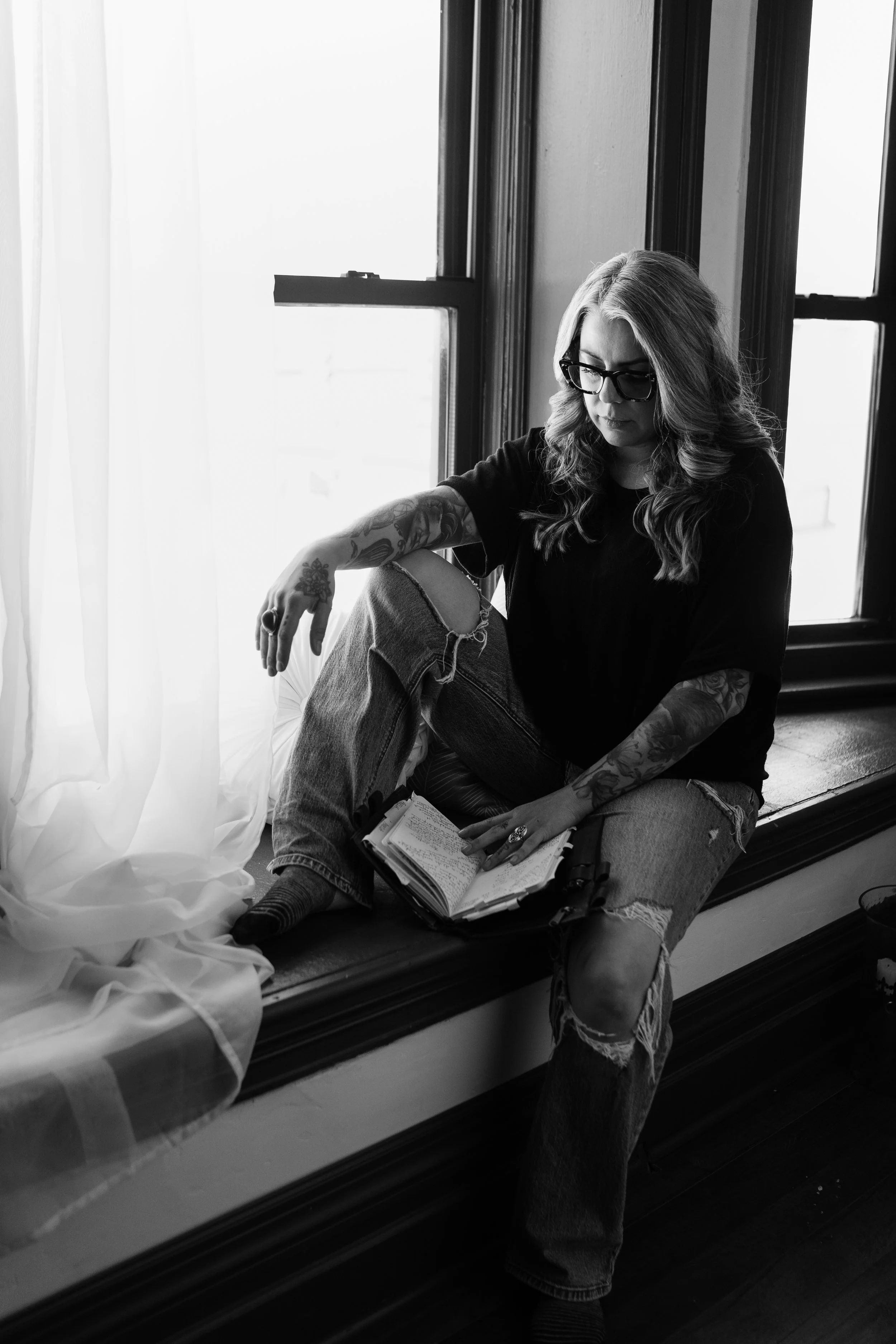
I am on a writerly journey, working towards the completion of my next novel, but I am in the wee beginning stages where I’ve just scrapped the first 15k words I wrote and am trying to map out a new path.
I’m at ground zero. Right where I meet many of you.
And I want to talk to you about the perceived pains of this stage—the stage that comes before the story begins to write itself; the stage you spend clawing at your own brain for the answers while you flip through the pages of a notebook filled with half-written scenes and character one-liners; the nebulous space of a white page that breaks the spirit of a lot of writers before they’ve had the chance to give their story a real voice.
I could feel a story about mothering—about, quite literally, the blind intuition and self-trust it takes to mother—and I started to fill pages with a story about a blind girl born into a fearful seafaring culture, filled with mystery and adventure. I started to sketch out characters and situations that depicted a kaleidoscope of perspectives, trying to squeeze in everything I felt I wanted to say. And while I loved the world I’d built, there was a hollowness about it somehow. Like all I’d tried to say was skirting around something I hadn’t quite put thought to yet. And I’d come to admit (as my coach, Kate, lovingly uncovered) that I was avoiding the story about mothering I really had to tell. The true story beneath it all. My story.
The birth of my daughter was traumatic, and the week that followed her entrance into the world was one of uncertainty, of deep fear and helplessness. I sat at the bedside of her NICU crib, wrapped in no other assurance than that of the fortitude of my love for her.
I watched my little girl pull herself through. Her strength, her grounded calmness, her wisdom and ability to trust her caretakers was awe-inspiring, and it pulled me through, too. Day and night, in between pacing and washing her and stroking her soft head, I wrote my daughter letter after letter while she slept. I wrote them on violet-colored paper.
When it was all done, when I brought our baby home, I did my best to focus on our little family of four and tucked away all the rest. I tucked away the grief. The fear. The crushing guilt. The self-deprecation I felt. The disappointment. And I hung on to the love. The pride. The strength. The beauty.
So when I found a hollow space deep in the middle of my new novel, I also found pieces of myself. Pieces that were calling out to be acknowledged, to be reckoned with, to be held and nourished and felt through. It was never the page that was stopping me. Never problems in my story map or with my characters. It was me, needing to feel all the things I’d tucked away. It was my vulnerability that was missing. And that missing vulnerability was causing me to write deflated characters with breathless voices.
As I continue on my journey, my work is to recreate a new birth—both for myself and for my story. To create a ceremony that honors that grief I feel over the birth experience my daughter and I couldn’t have, and that speaks to what my body has to say about what it means to me to be a mother. That’s how I get to the other side.
That’s how this book will start to write itself.
I invite you to do the same. To write with intentional vulnerability. To allow yourself to dig deep inside and excavate all the caverns of your being, to pull out and marvel at all the pieces of yourself, and then lay them down on the page. Fearlessly. We need stories like that. Like yours.
Recent Posts

In the deep hibernation of December and January, I have been creating. I have been channeling all of these things around me into workshops and programs and talks and paintings and weavings and drawings and poems. My hands have been busy in communication with my heart with the knowledge that under the threat of an ethnostate, the mere act of creativity is political resistance.